Oil At $150 Soon? Qatar Minister Sounds Alarm As West Asia War Chokes Global Supply
Curated By :
Last Updated:March 06, 2026, 17:22 IST
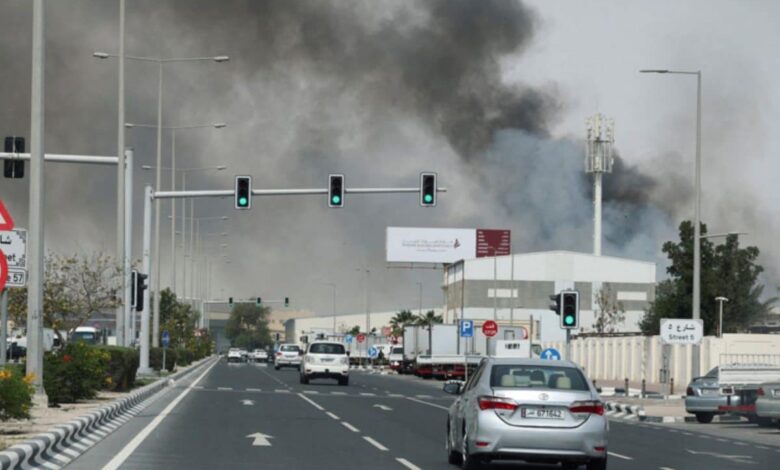
Qatar's energy minister said the full extent of damage to the Ras Laffan facility was still being assessed and that it was unclear how long repairs would take.
resetRapid ReadRapid ReadSummarized by AI.+ More Rapid Read Like this summary?Share Your Feedback
Qatar’s energy minister sounded a stark alarm over the economic fallout from the escalating West Asia conflict, warning that oil prices could surge to $150 a barrel, Gulf energy exports could grind to a halt and GDP growth worldwide would take a serious hit if hostilities persist for even a few more weeks.
Saad al-Kaabi, who also serves as chief executive of QatarEnergy, told the Financial Times that the war had already forced Qatar to declare force majeure after an Iranian drone strike hit Ras Laffan- the country’s largest liquefied natural gas (LNG) facility- and warned that other Gulf exporters were on the brink of doing the same.
Recommended Stories
- Understanding The Strategic Calculus Behind China’s 'Unconditional Support' For Iran | Exclusive
- Russia Is Actively Feeding Iran Intelligence On US Military Targets In West Asia: Report
- 'Our Response Is Clear': Iran Tells Mediators To Focus On US And Israel, Not Tehran
- US Not In Position To Provide Enough Missiles For Gulf, Ukraine Or Its Own Army: EU
“Everybody that has not called for force majeure we expect will do so in the next few days that this continues. All exporters in the Gulf region will have to call force majeure," he said, adding, “If they don’t, they are at some point going to pay the liability for that legally, and that’s their choice."
The scale of the disruption at Qatar’s end is already severe. Al-Kaabi said the full extent of damage to the Ras Laffan facility was still being assessed and that it was unclear how long repairs would take. Even in the best-case scenario- an immediate end to hostilities- he warned it would take “weeks to months" to restore normal export operations due to logistical chaos.
“Our ships are all over the place," he said, noting that only six or seven vessels from Qatar’s fleet of 128 LNG carriers were currently available to load cargo.
The most alarming scenario centres on the Strait of Hormuz- the narrow waterway through which roughly one-fifth of global oil and gas shipments pass. Al-Kaabi forecast that crude prices could reach $150 a barrel within two to three weeks if tankers remain unable to transit the strait, while natural gas prices could climb to $40 per MMBtu, nearly four times pre-war levels.
Traffic through the strait has slowed significantly since the United States and Israel launched military strikes on Iran. At least 10 ships have reportedly been hit, insurance costs have surged and shipping companies have grown increasingly reluctant to risk the passage.
“The way that we are seeing the attacks, bringing ships into the strait… it’s too dangerous," al-Kaabi said, adding, “It’s too close to the shore to bring ships in."
Al-Kaabi said QatarEnergy shut down production primarily on safety grounds after its military warned of an imminent threat to offshore facilities. Around 9,000 workers were evacuated within 24 hours of the strike.
“When we have our people in danger and we’re actually being hit in a military zone and we can’t work anymore, and we can’t put our people in harm’s way, we have to declare force majeure," he said.
Track US-Israel-Iran War LIVE Updates here
He was unequivocal on when production would resume: only when the military confirms a complete cessation of hostilities.
“We are not going to put our people in harm’s way," he said.
Al-Kaabi’s most sweeping warning was reserved for the broader global economy. Gulf producers supply not just oil and gas but also vast quantities of petrochemicals and fertiliser feedstocks that feed manufacturing supply chains worldwide.
“This will bring down the economies of the world," he told the Financial Times, adding, “If this war continues for a few weeks, GDP growth around the world will be impacted. Everybody’s energy price is going to go higher."
He cautioned that industrial shortages would ripple far beyond the energy sector.
“There will be shortages of some products and there will be a chain reaction of factories that cannot supply," he said.
Click here to add News18 as your preferred news source on Google. Check Iran Israel War News Today Live Updates.
Stay updated with the latest news updates along with key india news and world news. Explore viral news, politics, city news, explainers, and expert opinions on News18. Join the fun, play games on News18. Download the News18 App to stay updated!view commentsLocation :QatarFirst Published:March 06, 2026, 16:01 ISTNews world Oil At $150 Soon? Qatar Minister Sounds Alarm As West Asia War Chokes Global SupplyDisclaimer: Comments reflect users’ views, not News18’s. Please keep discussions respectful and constructive. Abusive, defamatory, or illegal comments will be removed. News18 may disable any comment at its discretion. By posting, you agree to our Terms of Use and Privacy Policy.Loading comments…Read More